Tuesday, July 14, 2009
| This article mentions the Wikimedia Foundation, one of its projects, or people related to it. Wikinews is a project of the Wikimedia Foundation. |
The English National Portrait Gallery (NPG) in London has threatened on Friday to sue a U.S. citizen, Derrick Coetzee. The legal letter followed claims that he had breached the Gallery’s copyright in several thousand photographs of works of art uploaded to the Wikimedia Commons, a free online media repository.
In a letter from their solicitors sent to Coetzee via electronic mail, the NPG asserted that it holds copyright in the photographs under U.K. law, and demanded that Coetzee provide various undertakings and remove all of the images from the site (referred to in the letter as “the Wikipedia website”).
Wikimedia Commons is a repository of free-to-use media, run by a community of volunteers from around the world, and is a sister project to Wikinews and the encyclopedia Wikipedia. Coetzee, who contributes to the Commons using the account “Dcoetzee”, had uploaded images that are free for public use under United States law, where he and the website are based. However copyright is claimed to exist in the country where the gallery is situated.
The complaint by the NPG is that under UK law, its copyright in the photographs of its portraits is being violated. While the gallery has complained to the Wikimedia Foundation for a number of years, this is the first direct threat of legal action made against an actual uploader of images. In addition to the allegation that Coetzee had violated the NPG’s copyright, they also allege that Coetzee had, by uploading thousands of images in bulk, infringed the NPG’s database right, breached a contract with the NPG; and circumvented a copyright protection mechanism on the NPG’s web site.
The copyright protection mechanism referred to is Zoomify, a product of Zoomify, Inc. of Santa Cruz, California. NPG’s solicitors stated in their letter that “Our client used the Zoomify technology to protect our client’s copyright in the high resolution images.”. Zoomify Inc. states in the Zoomify support documentation that its product is intended to make copying of images “more difficult” by breaking the image into smaller pieces and disabling the option within many web browsers to click and save images, but that they “provide Zoomify as a viewing solution and not an image security system”.
In particular, Zoomify’s website comments that while “many customers — famous museums for example” use Zoomify, in their experience a “general consensus” seems to exist that most museums are concerned with making the images in their galleries accessible to the public, rather than preventing the public from accessing them or making copies; they observe that a desire to prevent high resolution images being distributed would also imply prohibiting the sale of any posters or production of high quality printed material that could be scanned and placed online.
Other actions in the past have come directly from the NPG, rather than via solicitors. For example, several edits have been made directly to the English-language Wikipedia from the IP address 217.207.85.50, one of sixteen such IP addresses assigned to computers at the NPG by its ISP, Easynet.
In the period from August 2005 to July 2006 an individual within the NPG using that IP address acted to remove the use of several Wikimedia Commons pictures from articles in Wikipedia, including removing an image of the Chandos portrait, which the NPG has had in its possession since 1856, from Wikipedia’s biographical article on William Shakespeare.
Other actions included adding notices to the pages for images, and to the text of several articles using those images, such as the following edit to Wikipedia’s article on Catherine of Braganza and to its page for the Wikipedia Commons image of Branwell Brontë‘s portrait of his sisters:
- “THIS IMAGE IS BEING USED WITHOUT PERMISSION FROM THE COPYRIGHT HOLDER.”
- “This image is copyright material and must not be reproduced in any way without permission of the copyright holder. Under current UK copyright law, there is copyright in skilfully executed photographs of ex-copyright works, such as this painting of Catherine de Braganza.
- The original painting belongs to the National Portrait Gallery, London. For copies, and permission to reproduce the image, please contact the Gallery at picturelibrary@npg.org.uk or via our website at www.npg.org.uk”
Other, later, edits, made on the day that NPG’s solicitors contacted Coetzee and drawn to the NPG’s attention by Wikinews, are currently the subject of an internal investigation within the NPG.
Coetzee published the contents of the letter on Saturday July 11, the letter itself being dated the previous day. It had been sent electronically to an email address associated with his Wikimedia Commons user account. The NPG’s solicitors had mailed the letter from an account in the name “Amisquitta”. This account was blocked shortly after by a user with access to the user blocking tool, citing a long standing Wikipedia policy that the making of legal threats and creation of a hostile environment is generally inconsistent with editing access and is an inappropriate means of resolving user disputes.
The policy, initially created on Commons’ sister website in June 2004, is also intended to protect all parties involved in a legal dispute, by ensuring that their legal communications go through proper channels, and not through a wiki that is open to editing by other members of the public. It was originally formulated primarily to address legal action for libel. In October 2004 it was noted that there was “no consensus” whether legal threats related to copyright infringement would be covered but by the end of 2006 the policy had reached a consensus that such threats (as opposed to polite complaints) were not compatible with editing access while a legal matter was unresolved. Commons’ own website states that “[accounts] used primarily to create a hostile environment for another user may be blocked”.
In a further response, Gregory Maxwell, a volunteer administrator on Wikimedia Commons, made a formal request to the editorial community that Coetzee’s access to administrator tools on Commons should be revoked due to the prevailing circumstances. Maxwell noted that Coetzee “[did] not have the technically ability to permanently delete images”, but stated that Coetzee’s potential legal situation created a conflict of interest.
Sixteen minutes after Maxwell’s request, Coetzee’s “administrator” privileges were removed by a user in response to the request. Coetzee retains “administrator” privileges on the English-language Wikipedia, since none of the images exist on Wikipedia’s own website and therefore no conflict of interest exists on that site.
Legally, the central issue upon which the case depends is that copyright laws vary between countries. Under United States case law, where both the website and Coetzee are located, a photograph of a non-copyrighted two-dimensional picture (such as a very old portrait) is not capable of being copyrighted, and it may be freely distributed and used by anyone. Under UK law that point has not yet been decided, and the Gallery’s solicitors state that such photographs could potentially be subject to copyright in that country.
One major legal point upon which a case would hinge, should the NPG proceed to court, is a question of originality. The U.K.’s Copyright, Designs and Patents Act 1988 defines in ¶ 1(a) that copyright is a right that subsists in “original literary, dramatic, musical or artistic works” (emphasis added). The legal concept of originality here involves the simple origination of a work from an author, and does not include the notions of novelty or innovation that is often associated with the non-legal meaning of the word.
Whether an exact photographic reproduction of a work is an original work will be a point at issue. The NPG asserts that an exact photographic reproduction of a copyrighted work in another medium constitutes an original work, and this would be the basis for its action against Coetzee. This view has some support in U.K. case law. The decision of Walter v Lane held that exact transcriptions of speeches by journalists, in shorthand on reporter’s notepads, were original works, and thus copyrightable in themselves. The opinion by Hugh Laddie, Justice Laddie, in his book The Modern Law of Copyright, points out that photographs lie on a continuum, and that photographs can be simple copies, derivative works, or original works:
- “[…] it is submitted that a person who makes a photograph merely by placing a drawing or painting on the glass of a photocopying machine and pressing the button gets no copyright at all; but he might get a copyright if he employed skill and labour in assembling the thing to be photocopied, as where he made a montage.”
Various aspects of this continuum have already been explored in the courts. Justice Neuberger, in the decision at Antiquesportfolio.com v Rodney Fitch & Co. held that a photograph of a three-dimensional object would be copyrightable if some exercise of judgement of the photographer in matters of angle, lighting, film speed, and focus were involved. That exercise would create an original work. Justice Oliver similarly held, in Interlego v Tyco Industries, that “[i]t takes great skill, judgement and labour to produce a good copy by painting or to produce an enlarged photograph from a positive print, but no-one would reasonably contend that the copy, painting, or enlargement was an ‘original’ artistic work in which the copier is entitled to claim copyright. Skill, labour or judgement merely in the process of copying cannot confer originality.”.
In 2000 the Museums Copyright Group, a copyright lobbying group, commissioned a report and legal opinion on the implications of the Bridgeman case for the UK, which stated:
- “Revenue raised from reproduction fees and licensing is vital to museums to support their primary educational and curatorial objectives. Museums also rely on copyright in photographs of works of art to protect their collections from inaccurate reproduction and captioning… as a matter of principle, a photograph of an artistic work can qualify for copyright protection in English law”. The report concluded by advocating that “museums must continue to lobby” to protect their interests, to prevent inferior quality images of their collections being distributed, and “not least to protect a vital source of income”.
Several people and organizations in the U.K. have been awaiting a test case that directly addresses the issue of copyrightability of exact photographic reproductions of works in other media. The commonly cited legal case Bridgeman Art Library v. Corel Corp. found that there is no originality where the aim and the result is a faithful and exact reproduction of the original work. The case was heard twice in New York, once applying UK law and once applying US law. It cited the prior UK case of Interlego v Tyco Industries (1988) in which Lord Oliver stated that “Skill, labour or judgement merely in the process of copying cannot confer originality.”
- “What is important about a drawing is what is visually significant and the re-drawing of an existing drawing […] does not make it an original artistic work, however much labour and skill may have gone into the process of reproduction […]”
The Interlego judgement had itself drawn upon another UK case two years earlier, Coca-Cola Go’s Applications, in which the House of Lords drew attention to the “undesirability” of plaintiffs seeking to expand intellectual property law beyond the purpose of its creation in order to create an “undeserving monopoly”. It commented on this, that “To accord an independent artistic copyright to every such reproduction would be to enable the period of artistic copyright in what is, essentially, the same work to be extended indefinitely… ”
The Bridgeman case concluded that whether under UK or US law, such reproductions of copyright-expired material were not capable of being copyrighted.
The unsuccessful plaintiff, Bridgeman Art Library, stated in 2006 in written evidence to the House of Commons Committee on Culture, Media and Sport that it was “looking for a similar test case in the U.K. or Europe to fight which would strengthen our position”.
The National Portrait Gallery is a non-departmental public body based in London England and sponsored by the Department for Culture, Media and Sport. Founded in 1856, it houses a collection of portraits of historically important and famous British people. The gallery contains more than 11,000 portraits and 7,000 light-sensitive works in its Primary Collection, 320,000 in the Reference Collection, over 200,000 pictures and negatives in the Photographs Collection and a library of around 35,000 books and manuscripts. (More on the National Portrait Gallery here)
The gallery’s solicitors are Farrer & Co LLP, of London. Farrer’s clients have notably included the British Royal Family, in a case related to extracts from letters sent by Diana, Princess of Wales which were published in a book by ex-butler Paul Burrell. (In that case, the claim was deemed unlikely to succeed, as the extracts were not likely to be in breach of copyright law.)
Farrer & Co have close ties with industry interest groups related to copyright law. Peter Wienand, Head of Intellectual Property at Farrer & Co., is a member of the Executive body of the Museums Copyright Group, which is chaired by Tom Morgan, Head of Rights and Reproductions at the National Portrait Gallery. The Museums Copyright Group acts as a lobbying organization for “the interests and activities of museums and galleries in the area of [intellectual property rights]”, which reacted strongly against the Bridgeman Art Library v. Corel Corp. case.
Wikimedia Commons is a repository of images, media, and other material free for use by anyone in the world. It is operated by a community of 21,000 active volunteers, with specialist rights such as deletion and blocking restricted to around 270 experienced users in the community (known as “administrators”) who are trusted by the community to use them to enact the wishes and policies of the community. Commons is hosted by the Wikimedia Foundation, a charitable body whose mission is to make available free knowledge and historic and other material which is legally distributable under US law. (More on Commons here)
The legal threat also sparked discussions of moral issues and issues of public policy in several Internet discussion fora, including Slashdot, over the weekend. One major public policy issue relates to how the public domain should be preserved.
Some of the public policy debate over the weekend has echoed earlier opinions presented by Kenneth Hamma, the executive director for Digital Policy at the J. Paul Getty Trust. Writing in D-Lib Magazine in November 2005, Hamma observed:
- “Art museums and many other collecting institutions in this country hold a trove of public-domain works of art. These are works whose age precludes continued protection under copyright law. The works are the result of and evidence for human creativity over thousands of years, an activity museums celebrate by their very existence. For reasons that seem too frequently unexamined, many museums erect barriers that contribute to keeping quality images of public domain works out of the hands of the general public, of educators, and of the general milieu of creativity. In restricting access, art museums effectively take a stand against the creativity they otherwise celebrate. This conflict arises as a result of the widely accepted practice of asserting rights in the images that the museums make of the public domain works of art in their collections.”
He also stated:
- “This resistance to free and unfettered access may well result from a seemingly well-grounded concern: many museums assume that an important part of their core business is the acquisition and management of rights in art works to maximum return on investment. That might be true in the case of the recording industry, but it should not be true for nonprofit institutions holding public domain art works; it is not even their secondary business. Indeed, restricting access seems all the more inappropriate when measured against a museum’s mission — a responsibility to provide public access. Their charitable, financial, and tax-exempt status demands such. The assertion of rights in public domain works of art — images that at their best closely replicate the values of the original work — differs in almost every way from the rights managed by the recording industry. Because museums and other similar collecting institutions are part of the private nonprofit sector, the obligation to treat assets as held in public trust should replace the for-profit goal. To do otherwise, undermines the very nature of what such institutions were created to do.”
Hamma observed in 2005 that “[w]hile examples of museums chasing down digital image miscreants are rare to non-existent, the expectation that museums might do so has had a stultifying effect on the development of digital image libraries for teaching and research.”
The NPG, which has been taking action with respect to these images since at least 2005, is a public body. It was established by Act of Parliament, the current Act being the Museums and Galleries Act 1992. In that Act, the NPG Board of Trustees is charged with maintaining “a collection of portraits of the most eminent persons in British history, of other works of art relevant to portraiture and of documents relating to those portraits and other works of art”. It also has the tasks of “secur[ing] that the portraits are exhibited to the public” and “generally promot[ing] the public’s enjoyment and understanding of portraiture of British persons and British history through portraiture both by means of the Board’s collection and by such other means as they consider appropriate”.
Several commentators have questioned how the NPG’s statutory goals align with its threat of legal action. Mike Masnick, founder of Techdirt, asked “The people who run the Gallery should be ashamed of themselves. They ought to go back and read their own mission statement[. …] How, exactly, does suing someone for getting those portraits more attention achieve that goal?” (external link Masnick’s). L. Sutherland of Bigmouthmedia asked “As the paintings of the NPG technically belong to the nation, does that mean that they should also belong to anyone that has access to a computer?”
Other public policy debates that have been sparked have included the applicability of U.K. courts, and U.K. law, to the actions of a U.S. citizen, residing in the U.S., uploading files to servers hosted in the U.S.. Two major schools of thought have emerged. Both see the issue as encroachment of one legal system upon another. But they differ as to which system is encroaching. One view is that the free culture movement is attempting to impose the values and laws of the U.S. legal system, including its case law such as Bridgeman Art Library v. Corel Corp., upon the rest of the world. Another view is that a U.K. institution is attempting to control, through legal action, the actions of a U.S. citizen on U.S. soil.
David Gerard, former Press Officer for Wikimedia UK, the U.K. chapter of the Wikimedia Foundation, which has been involved with the “Wikipedia Loves Art” contest to create free content photographs of exhibits at the Victoria and Albert Museum, stated on Slashdot that “The NPG actually acknowledges in their letter that the poster’s actions were entirely legal in America, and that they’re making a threat just because they think they can. The Wikimedia community and the WMF are absolutely on the side of these public domain images remaining in the public domain. The NPG will be getting radioactive publicity from this. Imagine the NPG being known to American tourists as somewhere that sues Americans just because it thinks it can.”
Benjamin Crowell, a physics teacher at Fullerton College in California, stated that he had received a letter from the Copyright Officer at the NPG in 2004, with respect to the picture of the portrait of Isaac Newton used in his physics textbooks, that he publishes in the U.S. under a free content copyright licence, to which he had replied with a pointer to Bridgeman Art Library v. Corel Corp..
The Wikimedia Foundation takes a similar stance. Erik Möller, the Deputy Director of the US-based Wikimedia Foundation wrote in 2008 that “we’ve consistently held that faithful reproductions of two-dimensional public domain works which are nothing more than reproductions should be considered public domain for licensing purposes”.
Contacted over the weekend, the NPG issued a statement to Wikinews:
- “The National Portrait Gallery is very strongly committed to giving access to its Collection. In the past five years the Gallery has spent around £1 million digitising its Collection to make it widely available for study and enjoyment. We have so far made available on our website more than 60,000 digital images, which have attracted millions of users, and we believe this extensive programme is of great public benefit.
- “The Gallery supports Wikipedia in its aim of making knowledge widely available and we would be happy for the site to use our low-resolution images, sufficient for most forms of public access, subject to safeguards. However, in March 2009 over 3000 high-resolution files were appropriated from the National Portrait Gallery website and published on Wikipedia without permission.
- “The Gallery is very concerned that potential loss of licensing income from the high-resolution files threatens its ability to reinvest in its digitisation programme and so make further images available. It is one of the Gallery’s primary purposes to make as much of the Collection available as possible for the public to view.
- “Digitisation involves huge costs including research, cataloguing, conservation and highly-skilled photography. Images then need to be made available on the Gallery website as part of a structured and authoritative database. To date, Wikipedia has not responded to our requests to discuss the issue and so the National Portrait Gallery has been obliged to issue a lawyer’s letter. The Gallery remains willing to enter into a dialogue with Wikipedia.
In fact, Matthew Bailey, the Gallery’s (then) Assistant Picture Library Manager, had already once been in a similar dialogue. Ryan Kaldari, an amateur photographer from Nashville, Tennessee, who also volunteers at the Wikimedia Commons, states that he was in correspondence with Bailey in October 2006. In that correspondence, according to Kaldari, he and Bailey failed to conclude any arrangement.
Jay Walsh, the Head of Communications for the Wikimedia Foundation, which hosts the Commons, called the gallery’s actions “unfortunate” in the Foundation’s statement, issued on Tuesday July 14:
- “The mission of the Wikimedia Foundation is to empower and engage people around the world to collect and develop educational content under a free license or in the public domain, and to disseminate it effectively and globally. To that end, we have very productive working relationships with a number of galleries, archives, museums and libraries around the world, who join with us to make their educational materials available to the public.
- “The Wikimedia Foundation does not control user behavior, nor have we reviewed every action taken by that user. Nonetheless, it is our general understanding that the user in question has behaved in accordance with our mission, with the general goal of making public domain materials available via our Wikimedia Commons project, and in accordance with applicable law.”
The Foundation added in its statement that as far as it was aware, the NPG had not attempted “constructive dialogue”, and that the volunteer community was presently discussing the matter independently.
In part, the lack of past agreement may have been because of a misunderstanding by the National Portrait Gallery of Commons and Wikipedia’s free content mandate; and of the differences between Wikipedia, the Wikimedia Foundation, the Wikimedia Commons, and the individual volunteer workers who participate on the various projects supported by the Foundation.
Like Coetzee, Ryan Kaldari is a volunteer worker who does not represent Wikipedia or the Wikimedia Commons. (Such representation is impossible. Both Wikipedia and the Commons are endeavours supported by the Wikimedia Foundation, and not organizations in themselves.) Nor, again like Coetzee, does he represent the Wikimedia Foundation.
Kaldari states that he explained the free content mandate to Bailey. Bailey had, according to copies of his messages provided by Kaldari, offered content to Wikipedia (naming as an example the photograph of John Opie‘s 1797 portrait of Mary Wollstonecraft, whose copyright term has since expired) but on condition that it not be free content, but would be subject to restrictions on its distribution that would have made it impossible to use by any of the many organizations that make use of Wikipedia articles and the Commons repository, in the way that their site-wide “usable by anyone” licences ensures.
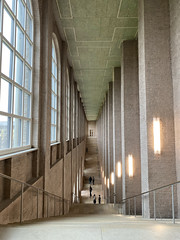
The proposed restrictions would have also made it impossible to host the images on Wikimedia Commons. The image of the National Portrait Gallery in this article, above, is one such free content image; it was provided and uploaded to the Wikimedia Commons under the terms of the GNU Free Documentation Licence, and is thus able to be used and republished not only on Wikipedia but also on Wikinews, on other Wikimedia Foundation projects, as well as by anyone in the world, subject to the terms of the GFDL, a license that guarantees attribution is provided to the creators of the image.
As Commons has grown, many other organizations have come to different arrangements with volunteers who work at the Wikimedia Commons and at Wikipedia. For example, in February 2009, fifteen international museums including the Brooklyn Museum and the Victoria and Albert Museum established a month-long competition where users were invited to visit in small teams and take high quality photographs of their non-copyright paintings and other exhibits, for upload to Wikimedia Commons and similar websites (with restrictions as to equipment, required in order to conserve the exhibits), as part of the “Wikipedia Loves Art” contest.
Approached for comment by Wikinews, Jim Killock, the executive director of the Open Rights Group, said “It’s pretty clear that these images themselves should be in the public domain. There is a clear public interest in making sure paintings and other works are usable by anyone once their term of copyright expires. This is what US courts have recognised, whatever the situation in UK law.”
The Digital Britain report, issued by the U.K.’s Department for Culture, Media, and Sport in June 2009, stated that “Public cultural institutions like Tate, the Royal Opera House, the RSC, the Film Council and many other museums, libraries, archives and galleries around the country now reach a wider public online.” Culture minster Ben Bradshaw was also approached by Wikinews for comment on the public policy issues surrounding the on-line availability of works in the public domain held in galleries, re-raised by the NPG’s threat of legal action, but had not responded by publication time.